
Abstract | |||||||||||||||||||||||||||||||||||||||||||||||||||||||||||||||||||||||||||||||||||||||||||||||||
This study investigates the key drivers of passenger loyalty within Vietnam’s low-cost airline sector, focusing on the roles of perceived value, brand image, and electronic word of mouth (eWOM). Customer loyalty, a crucial factor in the long-term success of airlines, enables cost efficiency, enhances brand equity, and builds sustainable customer relationships. Drawing on Holbrook’s Consumer Value Theory and Social Exchange Theory, the research posits that perceived value influences both loyalty and eWOM directly, while brand image moderates the eWOM-loyalty relationship. Using a structured survey, data was collected from 236 passengers, and Structural Equation Modeling (SEM) with SmartPLS 4.0 validated the measurement and structural models. Findings reveal that perceived value significantly enhances brand image and loyalty and drives eWOM, supporting its role as a core component of passenger behavior. Additionally, the moderating role of brand image strengthens the impact of eWOM on loyalty, indicating that a robust brand image reinforces consumer trust and engagement. The study’s practical implications recommend that Vietnam’s low-cost airlines prioritize perceived value, actively manage eWOM, and invest in brand-building strategies to boost loyalty. While these insights offer a comprehensive framework for strengthening competitive advantage, future research should address the study’s limitations by expanding the sample to different regions and exploring additional factors, such as service personalization and environmental sustainability. This research thus provides both theoretical contributions and actionable guidance for enhancing passenger loyalty in low-cost airlines. Keywords
1. IntroductionCustomer loyalty is a pivotal factor in the long-term success of airlines, offering significant economic benefits and competitive advantages. Research into customer loyalty provides airlines with invaluable insights for enhancing cost efficiency, bolstering brand equity, and establishing sustainable, long-term relationships with customers. Retaining loyal customers is not only more cost-effective than acquiring new ones, but these customers also tend to increase their purchase frequency and volume, leading to substantial economic gains (Arslan, 2020). Furthermore, customer loyalty plays a key role in enhancing brand equity. A strong brand helps airlines differentiate themselves in markets where services are often perceived as homogeneous (Denoue & Saykiewicz, 2009). This differentiation is crucial for maintaining a competitive edge. Airlines that foster customer loyalty can strengthen their market position by building enduring relationships with customers. Such relationships not only secure a steady stream of revenue but also turn customers into advocates who promote the brand and attract new customers at a lower cost (Arslan, 2020). However, most existing research on customer loyalty in the airline industry has primarily focused on traditional factors like service quality and perceived value, while overlooking the combined impact of personal values, destination image, and electronic word of mouth (eWOM) on customer loyalty. In addition, while several studies have emphasized the impact of brand image on customer loyalty (Fu, 2023; Kudeshia & Kumar, 2017; Yodpram & Intalar, 2020), limited research has explored the moderating role of brand image in the relationship between eWOM and customer loyalty. eWOM has become a powerful tool for shaping brand perception and fostering customer engagement (Saa’ed & Saa’ed, 2024), making it critical for airlines to understand how brand image moderates this relationship, especially in the digital age. Vietnam’s air transportation market is experiencing rapid growth, driven by rising tourism and a growing middle class. The country hosts five key airlines: Vietnam Airlines, VietJet Air, Bamboo Airways, Pacific Airlines, and Vietravel Airlines. Among them, VietJet Air and Pacific Airlines are the primary low-cost carriers (LCCs). These airlines collectively serve over 116 million passengers annually 2023, with LCCs accounting for over 60% of domestic traffic. VietJet Air leads the market with extensive domestic and international routes, while Pacific Airlines focuses on affordable domestic services for budget-conscious travelers (JSC, 2022). This competitive landscape highlights the surging demand for affordable air travel and underscores the vital role of customer loyalty and brand image in sustaining growth. This study aims to address these gaps by examining the relationships between personal values, destination image, eWOM, and customer loyalty, with a particular focus on the moderating effect of brand image. By doing so, the findings will provide both theoretical contributions and practical insights that can enhance marketing strategies in Vietnam’s LCC market and beyond. Perceived ValuePerceived value in aviation is the balance between the benefits passengers receive and the sacrifices they make. Benefits include service quality, brand reputation, and customer satisfaction, while sacrifices encompass monetary costs and non-monetary factors such as time and effort (Lu, 2014; Mayr & Zins, 2012). Key service attributes like refund policies and baggage allowances directly influence perceived value, shaping passengers’ pricing perceptions and overall experience (Fragnière et al., 2012). Brand image plays a critical role in enhancing perceived value, fostering customer loyalty whether the airline is full-service or low-cost (Fu, 2023). Additionally, service quality and price fairness are pivotal in passengers’ evaluations, with non-monetary costs like time and effort also impacting value perception (Lu, 2014). Airlines can strategically boost perceived value by aligning service offerings with customer expectations and employing value-based pricing models (Zhang et al., 2014). Corporate Social Responsibility (CSR) initiatives further elevate perceived value by strengthening brand image and loyalty (Mohamed, 2023). Consumer Value Theory, developed primarily by Holbrook, provides a theoretical foundation for understanding how perceived value influences customer loyalty. Holbrook defines consumer value as the subjective evaluation consumers make based on the benefits they receive compared to the costs they incur. He categorizes consumer value into various dimensions, including functional value (related to the quality and performance of a product), emotional value (linked to personal experiences and feelings), and social value (how others perceive the products consumers use). This theory is pivotal in explaining the relationship between perceived value and loyalty, suggesting that when consumers perceive superior value, they are more likely to remain loyal (Holbrook, 1999). Empirical studies within the airline industry support the critical role of perceived value in fostering customer loyalty. For instance, research on Citilink passengers reveals that perceived value not only directly impacts customer satisfaction but also significantly influences loyalty (Suweri & Hidayat, 2024). Similarly, in the Turkish aviation industry, perceived value, along with brand identification, mediates the relationship between service quality and loyalty, reinforcing that higher perceived value leads to greater customer loyalty (Gurler, 2024). Moreover, during the COVID-19 pandemic, perceived value, particularly in terms of safety measures, played a crucial role in maintaining brand loyalty for airlines (Kim & Kim, 2023). Based on Holbrook’s (1999) theory and these empirical findings, the hypothesis H1a: Perceived value positively and significantly affects passenger loyalty. Perceived value’s influence on electronic word of mouth (eWOM) can be understood through the lens of Social Exchange Theory (Blau, 2017), which posits that social interactions are driven by the exchange of resources, where individuals seek to maximize benefits and minimize costs. In the context of eWOM, when consumers perceive high value from airline services, they feel a sense of obligation to reciprocate by sharing positive feedback online, as a form of social exchange. This theory explains why customers who perceive greater value are more inclined to engage in positive eWOM, seeing it as a way to give back to the community or the brand. Empirical research supports this theoretical perspective. For instance, studies show that perceived value, encompassing elements such as service quality at airports (Nugroho, 2023), brand value (Odabaşoğlu et al., 2022), and informative social media marketing (Jong-un et al., 2023), positively correlates with eWOM behavior. Furthermore, eWOM is particularly impactful on young consumers, with factors like the credibility and quality of the message further driving purchase decisions (Song et al., 2021). However, the relationship is complex, as shown by research indicating that utilitarian value may influence social media behaviors like hashtag use but does not necessarily lead to brand loyalty through eWOM (Kim & Hyun, 2019). Nonetheless, eWOM itself, shaped by perceived value, has a direct impact on purchase intentions for airline tickets (Oktafia & Sutarwati, 2023). Based on this, the hypothesis is proposed H1b: Perceived value positively and significantly affects electronic word of mouth. Perceived value plays a pivotal role in shaping the airline brand image, both theoretically and empirically. Social Exchange Theory (Blau, 2017) suggests that consumers evaluate the benefits they receive relative to the costs incurred. In the context of airlines, when passengers perceive high value—whether through service quality, competitive pricing, or enhanced services—they are more likely to develop a favorable impression of the brand. This positive perception contributes to a stronger airline brand image, as customers feel their expectations have been exceeded, leading to more favorable brand associations. Empirical studies further support this relationship. Research on Taiwanese passengers reveals that perceived value has a significant positive effect on brand image, particularly for both full-service and low-cost airlines (Fu, 2023). Similarly, Choi found that core service quality directly influences perceived value, which in turn enhances the airline’s brand image, demonstrating the importance of perceived value as a mediator between service quality and brand perception (Choi, 2023). Furthermore, marketing activities, such as those conducted via social media, can boost perceived value, which further contributes to an improved brand image (Jang & Lim, 2022). Based on both theoretical insights and empirical findings, the hypothesis H1c: Perceived value positively and significantly affects airline brand image. Electronic word of mouthElectronic word of mouth (eWOM) has a significant and positive influence on passenger loyalty, grounded in both theoretical and empirical evidence. According to Social Exchange Theory, individuals engage in exchanges where they seek to maximize benefits and minimize costs (Blau, 2017). In the context of eWOM, passengers perceive value in the shared experiences and opinions of others, leading to increased trust and favorable attitudes toward the airline. This process enhances loyalty as passengers who trust positive eWOM are more likely to remain loyal to the airline. Empirical studies provide strong support for this theoretical foundation. For instance, research on Sriwijaya Air passengers in Indonesia shows that eWOM positively affects brand image, which in turn strengthens customer loyalty (Jaman & Sopiah, 2019). Similarly, a study in the Indian airline sector highlights that eWOM, promoted through social media marketing activities, directly contributes to brand loyalty by enhancing brand perception and customer engagement (Khan et al., 2024). Furthermore, the credibility and quality of eWOM messages increase passengers’ trust in the airline, reinforcing their decision to stay loyal (Ahmad et al., 2022). Based on both theoretical insights and empirical evidence, the hypothesis H2: Electronic word of mouth positively and significantly affects passenger loyalty. Airline brand imageAirline brand equity strongly influences loyalty, with brand loyalty serving as the key determinant of brand equity in the airline industry (Chen & Tseng, 2010). The brand image, which represents the overall impression passengers hold about an airline, plays a crucial role in determining their loyalty. A strong and positive brand image signals reliability, quality, and value, leading passengers to form stronger emotional and psychological connections with the airline. According to Social Identity Theory (Tajfel & Turner, 1979) individuals tend to identify with brands that reflect their values and identity, making them more likely to remain loyal to such brands. A strong brand image can significantly bolster customer trust and loyalty, essential for fostering positive eWOM. Research supports this link: brand image directly enhances trust, which then positively impacts eWOM in social commerce (Bui & Chang, 2022). Likewise, brand loyalty—closely associated with brand image—strongly influences eWOM in the airline industry (Samosir et al., 2023). Thus, H3a: Airline brand image positively and significantly affects eWOM. Empirical evidence supports this relationship. A study on Taiwanese passengers demonstrated that brand image significantly enhances passenger loyalty, as passengers who perceive the brand positively are more likely to stay loyal to both full-service and low-cost airlines (Fu, 2023). Additionally, research on Royal Air Maroc shows that a favorable airline image boosts perceived service quality and passenger satisfaction, leading to increased loyalty and positive word-of-mouth (Boubker & Naoui, 2022). Similarly, a study on Citilink Indonesia found that both brand image and brand trust are critical drivers of customer loyalty, as they reinforce passengers’ confidence in the airline’s ability to meet their needs (Aristana et al., 2022). Thus, a strong brand image cultivates trust and emotional attachment, leading passengers to choose the same airline repeatedly, even when alternatives are available. H3b: Airline brand image positively and significantly affects passenger loyalty. In the context of eWOM, a strong airline brand image amplifies perceived value by reinforcing the credibility and reliability of online reviews and recommendations. Expectation-confirmation theory further supports this, proposing that passengers are more likely to develop loyalty when eWOM aligns with their pre-existing beliefs and expectations about a brand (Oliver, 1980). A strong brand image thus magnifies the influence of positive eWOM by reinforcing these expectations and increasing satisfaction, which strengthens the consumer’s trust and connection with the airline (Mathilda et al., 2022). Moreover, according to brand equity theory, a robust brand image acts as a valuable intangible asset that enhances perceived service quality, customer satisfaction, and perceived value—key drivers of passenger loyalty (Aaker, 2009). Empirical studies show that brand image not only increases customer satisfaction but also boosts the impact of eWOM on loyalty by aligning passengers’ expectations with the brand’s promises (Yodpram & Intalar, 2020). When a strong airline brand image complements positive eWOM, it acts as a reinforcing factor, motivating customers to form loyalty by validating the positive experiences shared by others. It enhancing the influence of eWOM on loyalty through strengthened trust, perceived value, and expectation alignment (Wijaya & Anjasari, 2022). Building on these theoretical foundations, we propose: H4: Airline brand image will positively moderate the relationship between eWOM and passenger loyalty. 2. MethodData CollectionThis study explores the drivers of passenger loyalty within Vietnam’s low-cost airline sector, utilizing a structured survey approach. An 18-item questionnaire spanning four core factors—Perceived Value, Electronic Word of Mouth, Airline Brand Image, and Passenger Loyalty—was meticulously crafted, grounded in validated scales and fine-tuned for Vietnam with expert insights. The survey questions were refined with input from aviation, tourism, and consumer behavior experts. Professors, senior lecturers, and experienced researchers from the Vietnam Aviation Academy provided critical feedback, ensuring contextual and cultural relevance for Vietnam’s aviation market. Industry professionals with expertise in ground services, airline management, airport administration, and operational services further enhanced the questionnaire’s precision. Their practical insights aligned the survey with industry standards and the unique needs of Vietnam’s aviation sector. A pilot test involving 22 participants refined clarity, minimizing measurement bias. The final survey, conducted from February to August 2024 via Google Forms, gathered 236 valid responses from a targeted sample of 250 passengers who had flown low-cost airlines. To facilitate convenient participation, on-site surveys were conducted at Tan Son Nhat International Airport and Noi Bai International Airport. Passengers accessed the survey via a pre-designed questionnaire hosted on the Google Forms platform. A clearly displayed QR code was provided at the survey site, allowing passengers to easily scan it with their smartphones, instantly redirecting them to the Google Forms survey. This approach ensured fast, seamless, and user-friendly participation, maximizing the response rate and enhancing the quality of data collection. Hair et al. require a minimum sample size that is 10 times the number of observed variables (Hair et al., 2014), this study’s 18 observed variables necessitate at least 180 samples. To enhance data reliability, accuracy, and generalizability, 250 samples were initially targeted, yielding 236 valid responses for analysis. The passengers who participated in this survey had diverse flight experiences. Most of them had flown with low-cost airlines multiple times, with flight frequencies ranging from occasional travelers (1-2 times per year) to frequent flyers (more than 5 times per year). Their experiences included domestic and international flights, providing a comprehensive perspective on customer satisfaction and loyalty. Table 1 presents the demographic profile of the respondents. Table 1. Demographic profile of the respondents
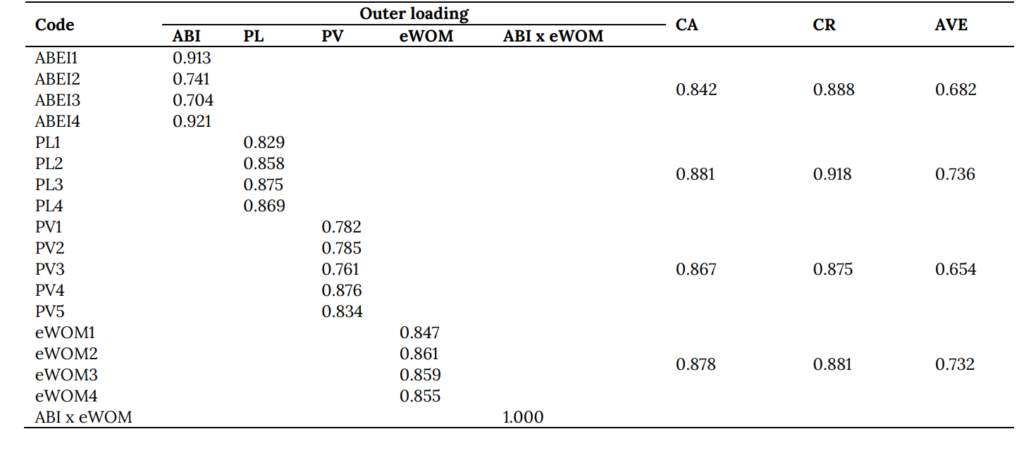
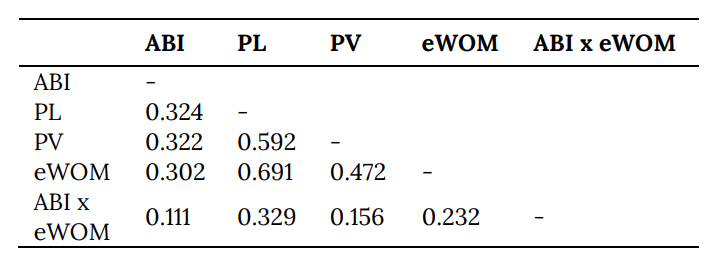
Data Analysis and Measurement ApproachUsing SmartPLS 4, Structural Equation Modeling (SEM) confirmed reliability and validity, with composite reliability and Cronbach’s Alpha (>0.7) assessing reliability, and Average Variance Extracted (AVE) (>0.5) ensuring construct validity. Responses were rated on a 5-point Likert scale (1 = strongly disagree, 5 = strongly agree) to capture the nuanced drivers of loyalty within the low-cost airline context. Measurement ItemsDrawing on validated scales, the study adapted measurement items to fit Vietnam’s low-cost airline market. Perceived Value (PV1-PV5) adapted from Fu (2023), including “This flight experience provides me with comfort and satisfaction”, “I believe this airline has strong potential to grow sustainably in the aviation industry”, “Considering the ticket price, I am satisfied with the quality of in-flight services”, “The airfare I paid is reasonable for a low-cost airline” and “By purchasing this ticket, I saved significantly on travel costs”. Electronic Word of Mouth (eWOM1-eWOM4) items from Kudeshia & Kumar (2017): “I often read reviews and posts from other passengers or friends to ensure I choose the right low-cost airline”, “I often read reviews and posts from other passengers or friends to learn which airlines leave a good impression”, “I often read reviews and posts from other passengers or friends to gather information about low-cost airlines”, “I often read reviews and posts from other passengers or friends to feel more confident in my choice of airline.” Airline Brand Image (ABI1-ABI5) based on Chen & Tseng (2010): “The airline is recognized as a leader in the low-cost carrier market in Vietnam”, “Using this airline signifies practicality and cost-consciousness”, “The airline has a reputation for providing affordable and reliable services”, “The airline is recommended by influential figures or local celebrities, aligning with the preferences of Vietnamese consumers”, “The airline is known for its consistent on-time performance”. Finally, Passenger Loyalty (PL1-PL4) adapted from Chen & Tseng (2010): “I would consider flying with this low-cost airline again in the future, as it offers great value for money”, “I would recommend this low-cost airline to others who are looking for affordable and reliable travel options”, “I consider myself to be loyal to this airline, as it consistently meets my expectations for budget-friendly flights”, “Even if another airline offers similar services, I would still prefer to fly with this low-cost carrier due to its affordability and convenience”. 3. Results and DiscussionMeasurement Model AssessmentAfter removing ABI5 due to a low outer loading (<0.4), the analysis in Table 2 confirms that the data satisfies the consistency requirements for the proposed model. Factor loadings exceed 0.4, while Cronbach’s alpha (CA) values are above 0.6, and composite reliability (CR) surpasses 0.7 (Peterson & Kim, 2013), indicating robust construct reliability. Additionally, all constructs show Average Variance Extracted (AVE) values over 0.5 (Hair et al., 2014), ensuring that the constructs capture meaningful variance from their measures rather than error, thereby validating their accuracy. In summary, high factor loadings, Cronbach’s alpha, composite reliability, and AVE values collectively establish strong reliability and validity, confirming that the measurement scales accurately capture the intended constructs and solidifying the foundation for further analysis. This study used the Heterotrait-Monotrait (HTMT) index to assess discriminant validity, ensuring each construct is uniquely measured. HTMT values below 0.9 indicate strong discriminant validity (Henseler et al., 2015). Impressively, all HTMT values in this study fell under this threshold (Table 3), confirming that each construct is distinct. This result demonstrates that our measures effectively capture the unique dimensions of each construct, enhancing the model’s overall validity.
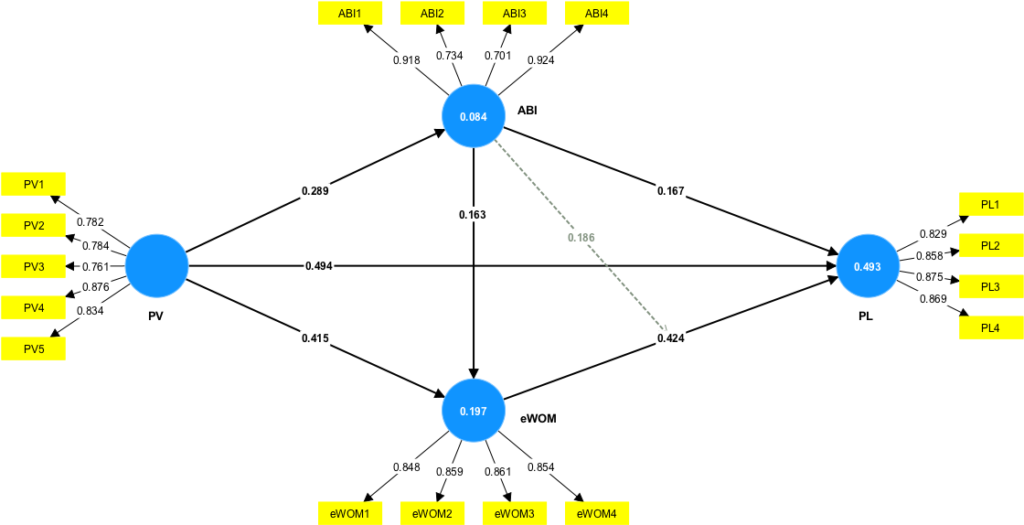
Fig. 1. Research model
Table 2. Construct measurement
Table 3. Construct measurement
Table 4. Explanation of variance and model fit The model’s R² values highlight its moderate explanatory power, with Passenger Loyalty (PL) achieving an R² of 0.493 (adjusted 0.484), meaning that 49.3% of PL variance is accounted for by the model’s predictors, along with a strong Q² of 0.351, demonstrating robust predictive relevance. Electronic Word of Mouth (eWOM) has an R² of 0.173 and Q² of 0.119, indicating moderate explanatory and predictive power, while Airline Brand Image (ABI) reflects an R² of 0.083 and Q² of 0.051, showing a modest level of influence (Hair et al., 2017). In PLS-SEM, Henseler et al introduced the SRMR (Standardized Root Mean Square Residuals) index to evaluate model fit, suggesting that an SRMR < 0.082 indicates suitability. Other metrics, such as d_ULS < 95% and d_G < 95%, must also meet this standard (Henseler et al., 2016). Model fit indicators—SRMR (0.067), d_ULS (0.688), and d_G (0.271)—confirm the model’s suitability, underscoring its effectiveness in capturing the constructs within the low-cost airline sector. Structural Model Assessment ResultsThe structural model analysis confirms statistically significant mediation paths, with p-values well within the accepted threshold (p < 0.05) (Hair et al., 2017). Table 5. Assessment of structural model
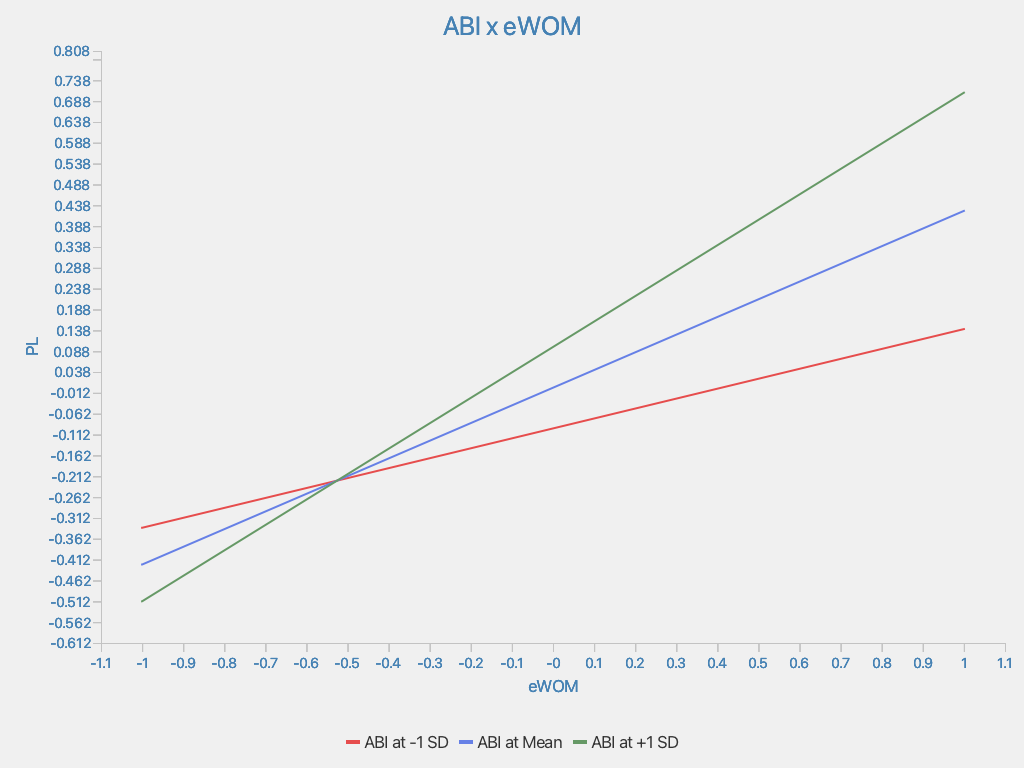
Specifically, Airline Brand Image (ABI) exerts a notable positive effect on Passenger Loyalty (PL) ($\beta = 0.167$, $p = 0.008$) and Electronic Word of Mouth (eWOM) ($\beta = 0.163$, $p = 0.013$). Perceived Value (PV) demonstrates an even stronger influence across multiple paths: on ABI ($\beta = 0.289$, $p < 0.001$), PL ($\beta = 0.494$, $p < 0.001$), and eWOM ($\beta = 0.415$, $p < 0.001$). These statistically significant relationships highlight the critical role of perceived value in shaping both loyalty and eWOM behaviors, underscoring its central position in the model. Moderating effect of Airline brand imageThe analysis reveals a statistically significant moderating effect of Airline Brand Image (ABI) on the relationship between Electronic Word of Mouth (eWOM) and Passenger Loyalty (PL), with an original sample value of 0.186 and a p-value of 0.005. This finding confirms that ABI strengthens the impact of eWOM on PL, highlighting the critical role of brand image in enhancing loyalty within the low-cost airline context. The interaction plot illustrates the moderating role of Airline Brand Image (ABI) in the relationship between Electronic Word of Mouth (eWOM) and Passenger Loyalty (PL). As shown, when ABI is high (+1 SD), the positive impact of eWOM on PL is stronger, indicating that a strong brand image amplifies the influence of eWOM on loyalty. Conversely, with low ABI (-1 SD), the impact of eWOM on PL is weaker. This reinforces the importance of brand image in leveraging eWOM to enhance passenger loyalty in the low-cost airline sector. Discussion of Research FindingsThe structural model analysis underscores the pivotal roles of perceived value, brand image, and electronic word of mouth (eWOM) in shaping passenger loyalty within the Vietnamese low-cost airline sector, aligning closely with findings in prior studies. Perceived value plays a central role, significantly enhancing brand image, loyalty, and eWOM behaviors. This result aligns with Holbrook’s Consumer Value Theory (1999), which posits that higher perceived value leads to stronger customer loyalty. Social Exchange Theory (Blau, 2017) further supports this, suggesting that satisfied passengers, when perceiving high value, feel inclined to reciprocate through positive eWOM. Similar conclusions are drawn by Suweri & Hidayat (2024) and Gurler (2024) in their respective studies on Citilink and Turkish airlines, where perceived value directly strengthened both loyalty and eWOM. This comprehensive evidence highlights perceived value as a critical component in influencing passenger behavior. Our findings affirm that perceived value also plays an essential role in boosting brand image, particularly within the low-cost airline context, aligning with Fu’s (2023) research on Taiwanese airlines, which demonstrated that perceived value significantly reinforced a positive airline brand image. Choi (2023) also found that high service quality directly impacts perceived value, which subsequently enhances brand image. |